06/04/26
Deforestation-free cocoa landscape in Cross River, Nigeria
Cross River State in Nigeria has some of the country’s most suitable land for cocoa cultivation. As global demand for cocoa has surged, driving up prices and reshaping international sourcing, pressure to expand production in the region has intensified. This expansion, however, has come at a steep environmental cost. Cocoa-driven land conversion is now a major contributor to deforestation and carbon emissions in the Cross River landscape.
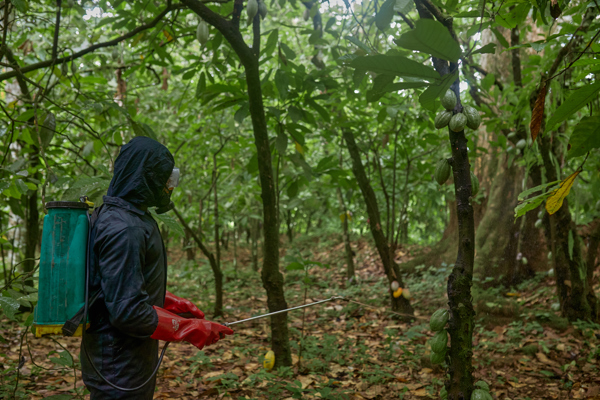
Over the past decade, the region has lost an estimated 12,000 hectares of forest each year, nearly 1% of its forest cover annually. While this deforestation is driven by multiple factors, cocoa expansion remains an important contributor. Even more concerning, the pace of forest loss has accelerated over the last five years and is likely to continue as global cocoa demand continues to rise.
In response to these challenges, Tulip (ECOM’s entity in Nigeria) and the Wildlife Conservation Society (WCS) are partnering on the Deforestation-Free Cocoa Landscape initiative, launched in July 2025. The WCS-led initiative aims to halt cocoa-driven deforestation while improving farmer livelihoods and protecting globally significant biodiversity.
Cocoa expansion and climate impact
Projections indicate that cocoa expansion in the region is increasingly linked to deforestation risks. Implementing targeted interventions to prevent cocoa cultivation from encroaching into protected areas and the surrounding 20-kilometre buffer zone is therefore critical to prevent further forest loss, maintain carbon stocks, and support climate resilience.
Encroachment into protected areas also remains a persistent threat. Addressing this risk is essential not only for reducing emissions but also for safeguarding critical ecosystems and wildlife habitats.
Ecosystem health and livelihoods
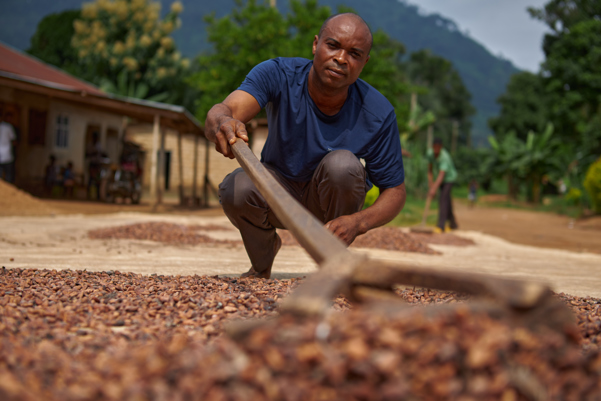
Cross River is Nigeria’s second-largest cocoa-producing state and supports the livelihoods of an estimated 75,000 to 100,000 farmers. In this region, cocoa productivity has the potential to increase with better agricultural training to address ageing and diseased farms, better input access and increased climate change resilience. Only about 20% of farmers currently receive technical extension support, mainly through company sustainability programs and Licensed Buying Associations.
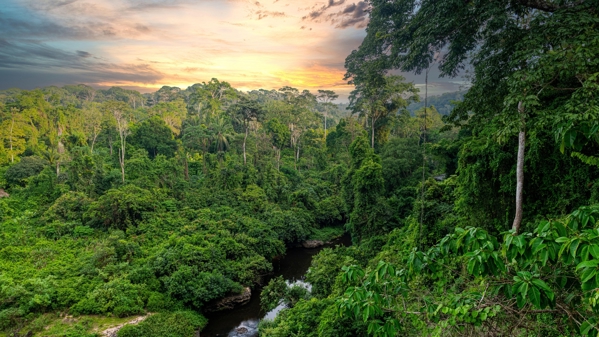
The Cross River landscape is also home to extraordinary biodiversity, including over 1,000 different species of butterflies, numerous threatened bird and amphibian species, leopards, African elephants, and 11 species of primates, such as chimpanzees, drills, and Preuss’ monkeys. It is also internationally recognised as the last stronghold of the Critically Endangered Cross River gorilla, with an estimated 250 to 300 individuals remaining in just three to four troops.
The Role of the Wildlife Conservation Society (WCS)
WCS is one of the world’s largest and longest-running conservation organisations, working to protect wildlife and ecosystems through scientific research, field-based conservation, and community engagement. WCS emphasises the close links between biodiversity, livelihoods, and climate resilience, and advances policies and practices that support long-term environmental sustainability. In Cross River State, they play a central role in the management of four protected areas that serve as critical biodiversity strongholds and together form a vital ecological corridor linking Nigeria and Cameroon.
Proposed Interventions for a Deforestation-Free Cocoa Landscape
The initiative focuses on an integrated set of interventions designed to protect forests, reduce emissions, and improve farmer livelihoods:
-
• Forest protection, monitoring, and reforestation
-
• Landscape coordination and policy engagement
-
• Climate-smart cocoa production
-
• Improved cocoa productivity and market access
-
• Cocoa agroforestry development and diversified livelihoods
-
• Improved traceability and support for Licensed Buying Associations
-
• Community engagement, social inclusion, and community forest management
More news
News
Click to read this articleStarbucks & SOGIMEX: The CERECEM Project
Over the past five years, Starbucks and SOGIMEX (our subsidiary in Honduras) have worked together through the CERECEM project to support coffee farmers and strengthen sustainable supply chains. Recently, key achievements from the 2025–2026 crop year were presented, highlighting ongoing efforts to strengthen supply chains that meet the C.A.F.E. Practices Verification Standard.
News
Click to read this articleACOM Vietnam 'Love Our Origins': Connecting with local coffee-growing communities
From 16 to 19 September 2026, 26 colleagues from ACOM, our subsidiary in Vietnam, travelled to Chư Sê (Gia Lai) and Măng Đen for the first 'Love Our Origins' trip, an initiative that brings colleagues closer to the coffee-growing communities behind the products they work with every day.
News
Click to read this articleFood Tech Summit 2026: Shaping the future of cocoa
The Food Tech Summit has established itself as one of the leading meeting points for the food and beverage industry in Latin America. This year, the Mexico Cocoa Team exhibited at the expo to strengthen relationships with customers and strategic partners, connecting with new prospects, and gaining first-hand insight into the trends shaping the future of our industry.
News
Click to read this articleECOM and Nespresso: Supporting regenerative agriculture among coffee farmers in India
In September this year, ECOM’s SMS team in India joined Nespresso in Karnataka for an event focused on Nespresso’s Sustainable Quality Plan, bringing together 250 coffee farmers to receive the AAA premium and learn about regenerative agriculture practices.
News
Click to read this articleECOM Italia: 10 years of growth and a new chapter for Esperanto Coffee
ECOM Italia recently celebrated 10 years since opening its first office in Genoa in 2016! As part of this continued development, Esperanto, the specialty coffee brand created by ECOM Italia in 2022, is now Esperanto Coffee: a new company based in Trieste, created to support this growth and offer coffee professionals an even more complete range of products and services.
News
Click to read this articleCóndor hosts Maestros Productores specialty coffee competition
Last month, Maestros Productores 2026 microlot competition brought together some of Colombia’s finest specialty coffee offerings.
News
Click to read this articleCAMSA celebrates 26 years!
CAMSA, our subsidiary in Peru, recently celebrated 26 years since opening its first office in 2000– a history shaped by its ability to adapt, grow and evolve alongside the country’s coffee and cocoa supply chains.
News
Click to read this article2025 Group Sustainability Report (GSR)
We are pleased to share the release of our 2025 Group Sustainability Report, highlighting the progress made across our coffee, cocoa, cotton, and nuts and ingredients supply chains over the past year.
News
Click to read this articleSupporting coffee farming families in Santander alongside Colcafé and Nutresa
After four years of collaboration, ECOM and its partners have concluded our "Café, Biodiversidad y Desarrollo de Empresas Familiares" programme, an initiative focused on strengthening family coffee businesses through partnership, commitment and a shared long-term vision.